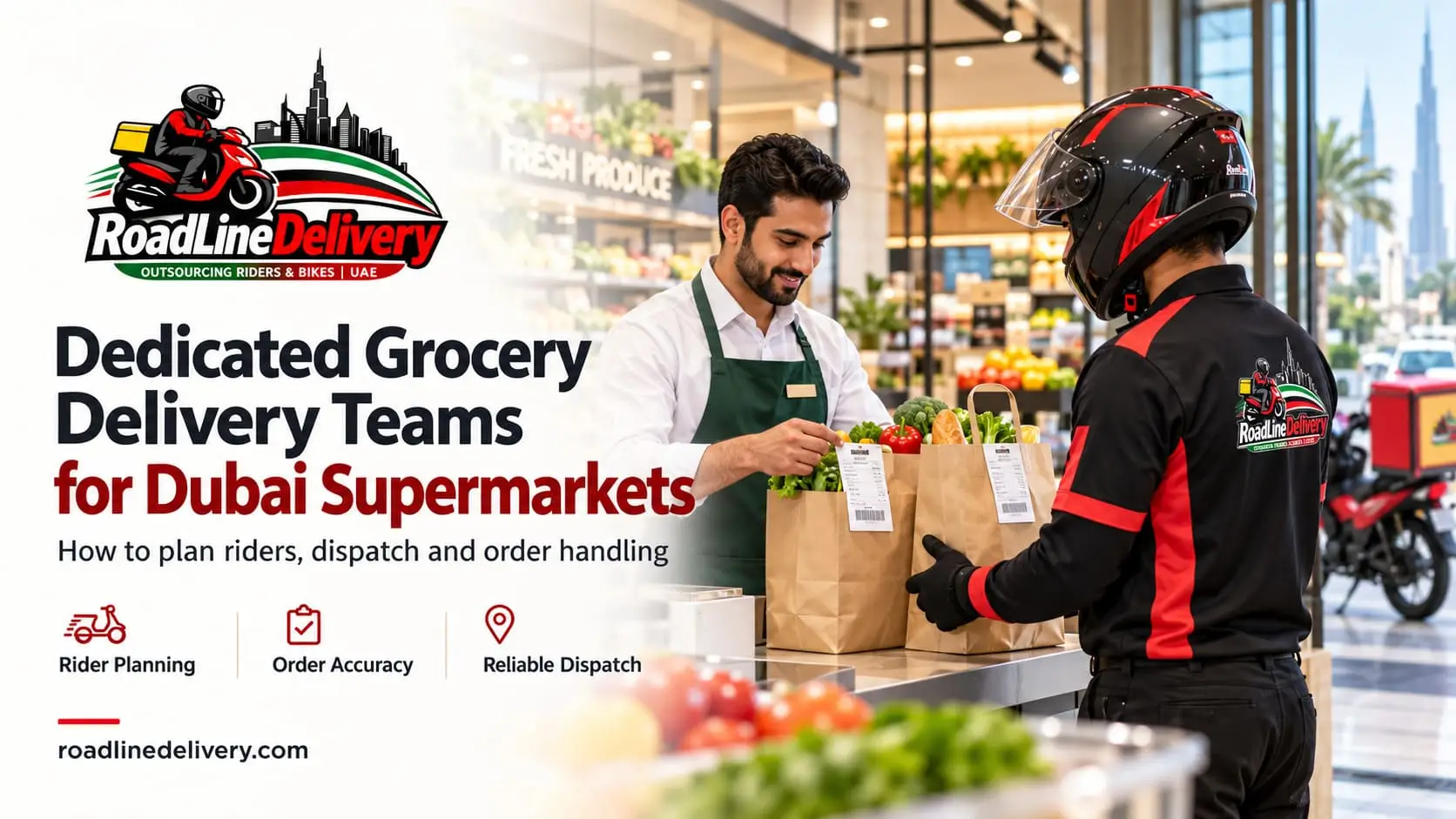
A supermarket delivery order can contain everything from bread and vegetables to frozen food, cleaning products and heavy household supplies. Getting that basket to a customer involves more than assigning a rider. Products must be picked correctly, packed appropriately and dispatched through a process that protects their condition. For supermarkets in Dubai, setting up a dedicated grocery delivery team starts with understanding demand and connecting store operations with delivery capacity. A well-organised team gives every order a clear path from shelf to doorstep.
Understand Your Grocery Delivery Demand
Before deciding how many delivery riders you need, review when orders arrive, where customers live and how large their baskets are. Daily totals can hide important differences: thirty orders spread across a day create a different workload from thirty orders arriving within one evening hour. Look at demand by time slot and neighbourhood, alongside the time required for picking, packing and customer handover. New supermarkets can begin with realistic forecasts and revise them once actual order data becomes available. This helps avoid both understaffing and paying for unnecessary idle capacity.
Separate Picking, Packing and Delivery Responsibilities
A dedicated grocery delivery team works better when responsibilities are clear. Decide who accepts orders, checks stock, approves substitutions, picks products, verifies quantities and releases completed baskets for dispatch. Riders should receive ready-to-deliver orders rather than discover missing items at the collection counter. Assign a coordinator to manage rider availability and resolve exceptions, even if this responsibility sits with an existing supervisor. When a product is unavailable, store staff should obtain the customer’s decision before dispatch instead of leaving the rider to negotiate substitutions at the doorstep.
Match Vehicles and Handling to Your Products
Choose delivery vehicles around basket size, weight, travel distance and product requirements. Motorcycles may suit smaller nearby orders, while bulky purchases can require four-wheel vehicles. Establish suitable packaging, load limits and separation procedures for food and household chemicals. Chilled and frozen products need particular attention; a standard motorcycle box should not be assumed to maintain the required transport conditions. Dubai Municipality publishes specific guidance for food transportation and delivery vehicles, which supermarkets should review when planning their setup. Confirm equipment suitability and any applicable approvals before including temperature-sensitive products in your delivery range.
Build a Clear Dispatch and Handover Process
Create a designated collection area where packed orders can be identified without disrupting shoppers or checkout staff. Each order should carry a reference linked to the customer’s address, contact details, delivery instructions and payment status. Record when the order becomes ready, when the rider collects it and when delivery is completed. Check the number of bags at collection so part of a basket is not accidentally left behind. Set delivery slots around realistic preparation and journey times, and group nearby orders only when vehicle capacity and product-handling requirements allow it.
Train Riders and Plan Backup Coverage
Delivery riders need to understand your supermarket’s collection procedures, safe handling expectations and customer communication standards. Explain how to report damaged packaging, an incorrect address, an unreachable customer or a payment discrepancy. They should know which decisions require approval from the store. Plan shifts around busy periods while accounting for breaks, rest days and absences. Establish a backup arrangement for rider shortages and vehicle breakdowns, with clear contacts and response expectations. Additional capacity for promotions should be arranged separately rather than assumed to be available at short notice.
Test the Service Before Expanding Coverage
Start with a manageable delivery area and order capacity, then review how the operation performs. Measure picking accuracy, collection waiting time, on-time deliveries, unsuccessful attempts and customer complaints. Track the full cost per completed order, including retained store expenses and any additional provider charges. Investigate the cause of delays before adding riders: slow picking or unresolved substitutions will not disappear simply because more motorcycles are waiting outside. Use the results to improve your workflow, adjust staffing and expand delivery zones when the existing service is consistently manageable.
Decide How to Arrange Your Delivery Workforce
Supermarkets can recruit internally, use delivery rider outsourcing or combine the two approaches. The choice depends on your management resources, existing vehicles and consistency of demand. Roadline Delivery provides riders, motorcycles and four-wheel vehicle support for businesses including supermarkets, alongside rider-only packages, monthly contracts and peak deployment support. Before choosing an arrangement, confirm responsibilities for dispatch, equipment, maintenance and replacement coverage. To discuss a dedicated grocery delivery team in Dubai, contact Roadline Delivery with your branch locations, order patterns and product-handling requirements, and request a proposal suited to your operation.