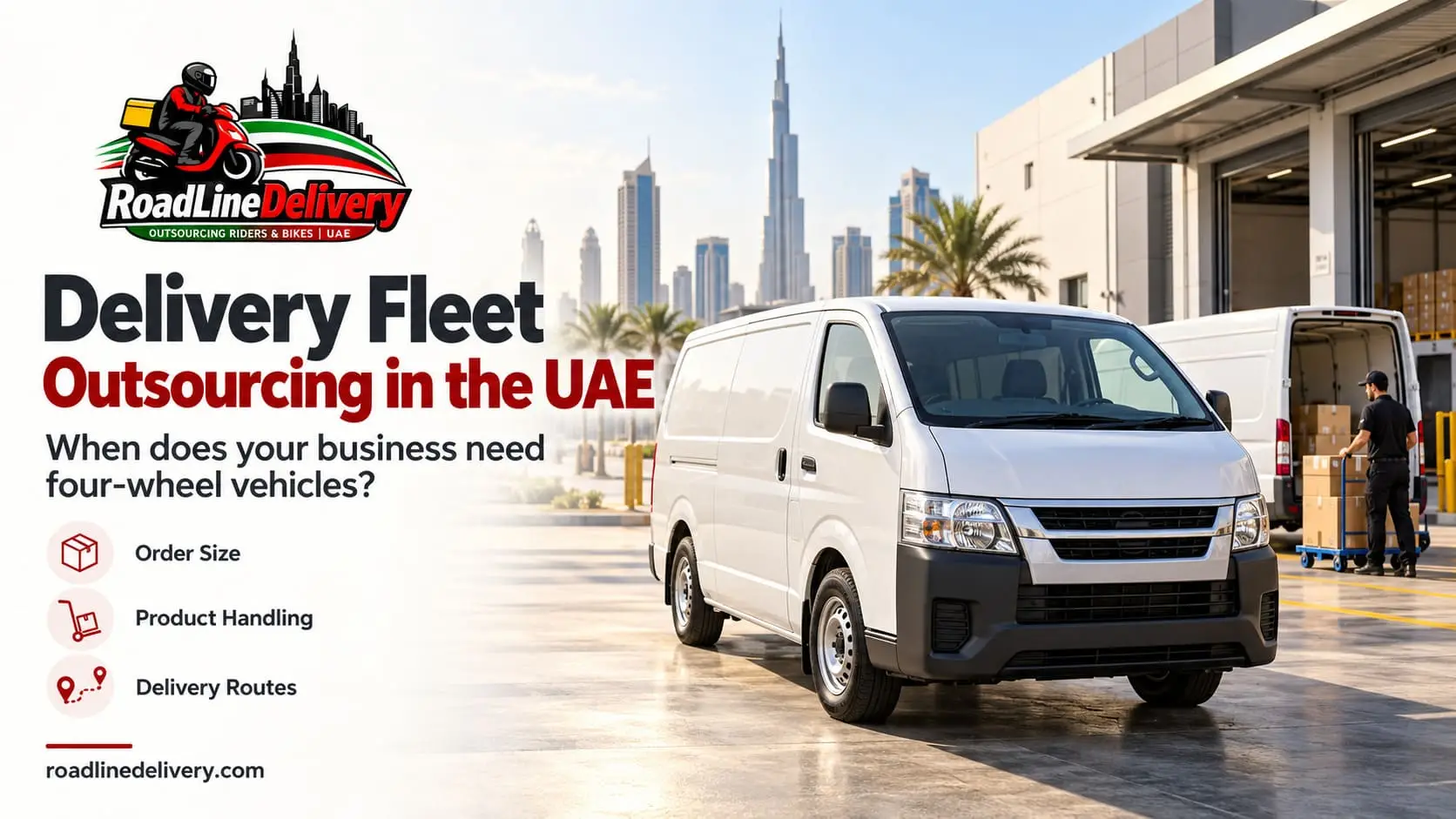
As order sizes grow and delivery routes change, businesses need to reassess whether their vehicles still suit the work. A retailer sending small parcels may eventually introduce bulky products, while a supermarket might start receiving larger household orders. Delivery fleet outsourcing in the UAE gives businesses a way to explore additional vehicle capacity without immediately purchasing a fleet. The decision should begin with your products, delivery schedule and operating requirements, rather than an assumption that a larger vehicle will automatically improve performance.
When Orders Exceed Motorcycle Capacity
One clear reason to consider four-wheel delivery vehicles is that orders regularly exceed the safe capacity of your motorcycle setup. Assess both weight and dimensions: a lightweight parcel can still occupy substantial space, while several compact packages can create a heavy combined load. Review your largest typical orders and how frequently they occur. If staff repeatedly split customer orders across separate trips or arrange additional transport, a suitable van may offer a more practical option. Vehicle selection must respect its rated capacity and allow loads to be secured properly.
When Products Need Different Handling Arrangements
Your product range can influence the choice of vehicle as much as order volume. Fragile items, larger retail purchases and mixed grocery baskets may require more space, separation or protection during transport. Consider how packages will be loaded, secured and unloaded, including whether handling equipment or additional assistance is needed. Temperature-sensitive products require a separate assessment of suitable transport conditions; an ordinary enclosed van should not be treated as a refrigerated vehicle. Discuss your actual packaged products with the provider so that the proposed vehicle and equipment fit the assignment.
When Routes Involve Multiple Stops or Collection Points
Four-wheel fleet support may be worth assessing when deliveries involve several customer stops, branch transfers or collections from multiple locations. A suitable vehicle can carry a consolidated load, but the route must still work within customer delivery windows. Loading order, parking access, unloading time and the distance between stops all affect productivity. A van completing a planned parcel route has different requirements from one handling urgent individual deliveries. Businesses can also use a mixed fleet, assigning motorcycles and four-wheel vehicles to the orders and routes each can serve effectively.
When the Full Cost Supports the Change
Compare the total cost of four-wheel delivery against the current method using representative orders and routes. Include the quoted vehicle and driver charges, fuel, tolls, parking, additional hours and any expenses your business retains. Review cost per completed delivery alongside load utilisation and service quality. A larger vehicle may reduce repeated trips when capacity is used effectively, but it can also create unnecessary expense when demand is limited. Outsourcing proposals should therefore reflect your actual workload, including quiet periods, rather than being assessed only against your busiest trading day.
When You Need Capacity Without Managing Another Vehicle
Delivery fleet outsourcing can suit businesses that need additional transport but have limited resources for vehicle procurement, driver recruitment or maintenance coordination. However, the responsibilities transferred depend on the agreement. Establish whether the provider supplies the vehicle, the driver or both, and confirm who handles servicing, repairs, insurance and replacement cover. Ask about operating areas, loading restrictions and any exclusions relevant to your products. Your business may still retain responsibility for dispatch, packaging and customer communication. A clear agreement makes the operational value of the arrangement easier to assess.
Test Four-Wheel Delivery Before Expanding
Where commercially available, begin with a trial covering typical parcel sizes, delivery locations and operating hours. Measure loading time, vehicle utilisation, completed stops, unsuccessful deliveries and customer feedback. Check whether drivers can access your collection points and customer premises without creating avoidable delays. For promotional periods or new branches, agree how extra vehicles will be requested and whether availability is guaranteed or subject to notice. Use the trial results to decide whether four-wheel vehicles should support selected routes, seasonal demand or a regular part of your delivery operation.
Discuss Your Fleet Requirements with Roadline Delivery
Roadline Delivery provides riders, drivers, motorcycles and four-wheel vehicle support for businesses including restaurants, supermarkets, retailers and e-commerce operators across the UAE. To explore delivery fleet outsourcing, prepare details of your products, package sizes, collection locations, delivery routes and required schedule. Contact Roadline Delivery to discuss suitable support and request a written proposal defining the vehicle requirements, service scope, costs and replacement arrangements for your operation.