
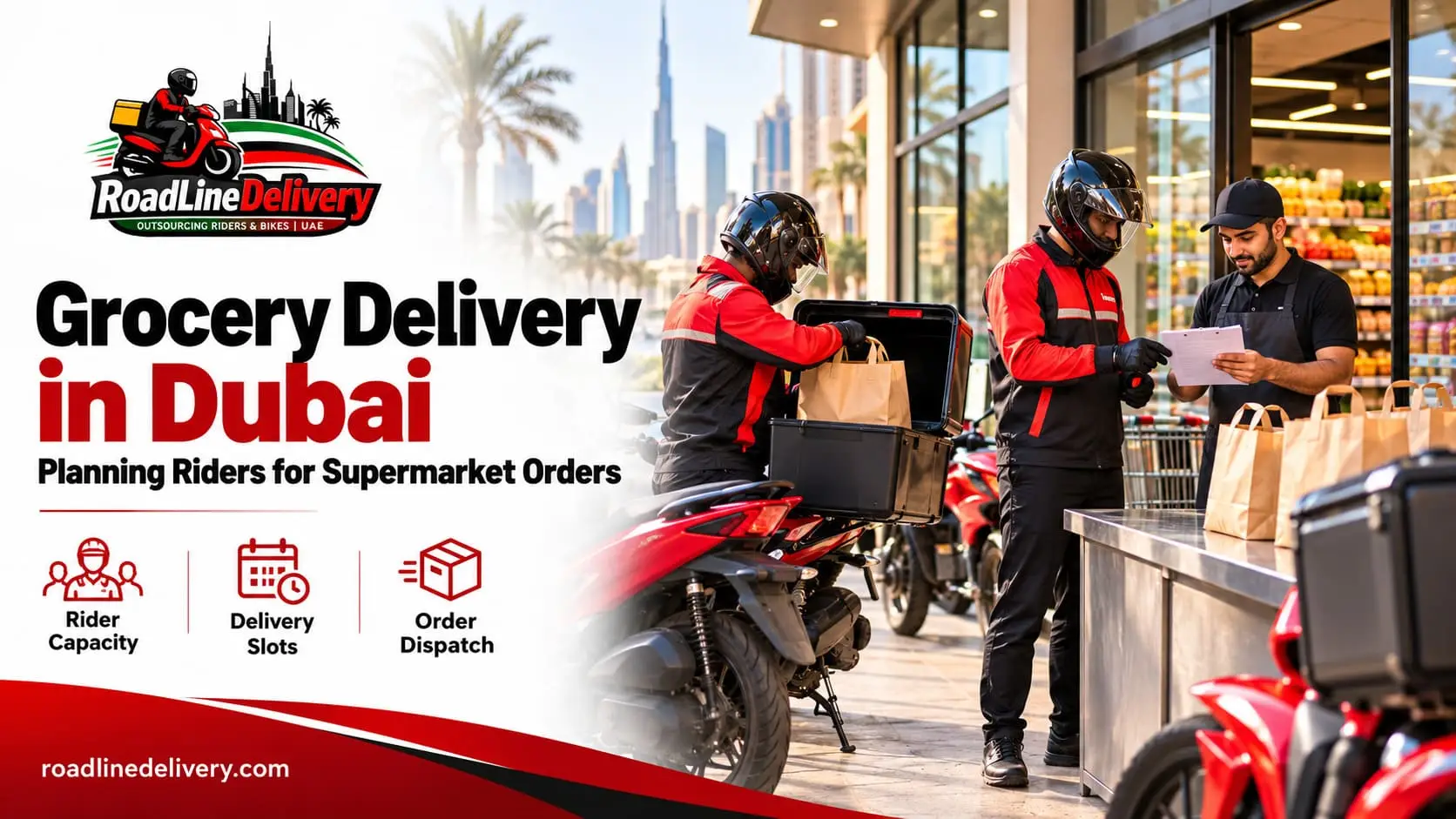
A supermarket can receive ten small grocery orders and one large household basket within minutes. Although each counts as one order, they create different demands on picking staff, delivery riders and vehicle space. Planning grocery delivery in Dubai therefore requires more than choosing a rider headcount based on daily sales. Supermarkets need to understand when orders become ready, where customers live and how long each delivery cycle takes. Matching rider capacity to these details helps stores set realistic delivery slots and manage busy periods more effectively.
Review Orders by Delivery Time Slot
Begin by reviewing orders against their promised delivery windows. A daily total can hide an evening rush that requires substantially more capacity than the morning shift. Record order volumes by hour, delivery location, basket size and preparation time. Separate normal trading patterns from promotions or unusually busy days so occasional spikes do not become your permanent staffing assumption. For a new service, start with limited slots and revise capacity using actual results. This gives your supermarket a clearer basis for planning delivery riders than relying on sales forecasts alone.
Measure the Complete Delivery Cycle
Travel time to the customer is only part of a rider’s workload. Include collection checks, loading, building access, customer handover and the journey back to the store or next collection point. Record these stages across representative routes and busy periods. A nearby apartment delivery may involve parking and lift access that extend the trip considerably. Use observed cycle times to estimate how many orders a rider can realistically complete within each slot, allowing for normal variation. Avoid setting targets that depend on every journey running without delays.
Calculate Rider Capacity Around Peak Demand
Divide the orders due within a delivery window by the realistic number each rider can complete during that period, then round up to estimate the working requirement. This is a planning starting point rather than a guaranteed staffing answer. Check whether the estimate accounts for breaks, different basket sizes, longer routes and riders already completing earlier orders. Schedule shifts so capacity is available when packed orders reach dispatch. Where possible, stagger coverage around recurring demand patterns and establish how additional support will be requested when bookings exceed the planned capacity.
Match Grocery Baskets to Suitable Vehicles
A few bags of packaged groceries create a different transport requirement from cases of water, bulky household products or a large weekly shop. Assess both weight and volume before assigning a motorcycle or four-wheel vehicle. Confirm how products will be secured and whether different items need separation. Chilled and frozen goods require suitable transport arrangements; extra space alone does not establish suitability. Dubai Municipality publishes guidance specifically for food transportation and delivery vehicles, which supermarkets should review when assessing equipment and operating requirements.
Connect Rider Dispatch with Picking and Packing
Riders waiting beside incomplete orders cannot use their scheduled capacity effectively. Give the dispatch coordinator visibility of which baskets are being picked, which need customer-approved substitutions and which are ready for collection. Store staff should resolve missing items before releasing an order. At handover, verify the order reference, bag count, address and delivery instructions. Keep products under appropriate storage conditions until collection. Measuring the interval between order readiness and rider departure helps distinguish a shortage of riders from delays caused by preparation or an unclear handover process.
Set Delivery Zones and Group Orders Carefully
Start with delivery areas your supermarket can serve consistently within its promised windows. Review actual journey times and building access rather than relying only on distance from the branch. Nearby orders may be grouped when vehicle capacity, product-handling requirements and customer deadlines allow. However, adding stops can extend the time each basket spends in transit. For supermarkets with several branches, assign orders using stock availability, preparation capacity and delivery workload together. The closest branch may need support if its picking team or available riders are already fully committed.
Plan Backup Support and Review Results
Confirm what happens when a rider is absent, a vehicle breaks down or demand rises unexpectedly. Define the operational contact, replacement procedure and agreed response expectations. Additional promotional capacity should be discussed separately from routine replacement cover. Review on-time deliveries, collection waiting time, incomplete handovers, unsuccessful attempts and cost per completed order. Investigate why performance changes before adjusting headcount. These measures help supermarkets improve grocery delivery planning while keeping staffing decisions connected to the work riders actually perform.
Discuss Supermarket Delivery Support with Roadline Delivery
Roadline Delivery supports supermarkets and other businesses with riders, motorcycles and four-wheel vehicles. Its services include rider-only arrangements, rider-and-bike packages, monthly rider contracts and peak deployment support. To plan delivery riders for your supermarket orders in Dubai, contact Roadline Delivery with your branch locations, delivery slots, basket sizes and expected workload. Request a proposal covering capacity, vehicle suitability, responsibilities and replacement arrangements.