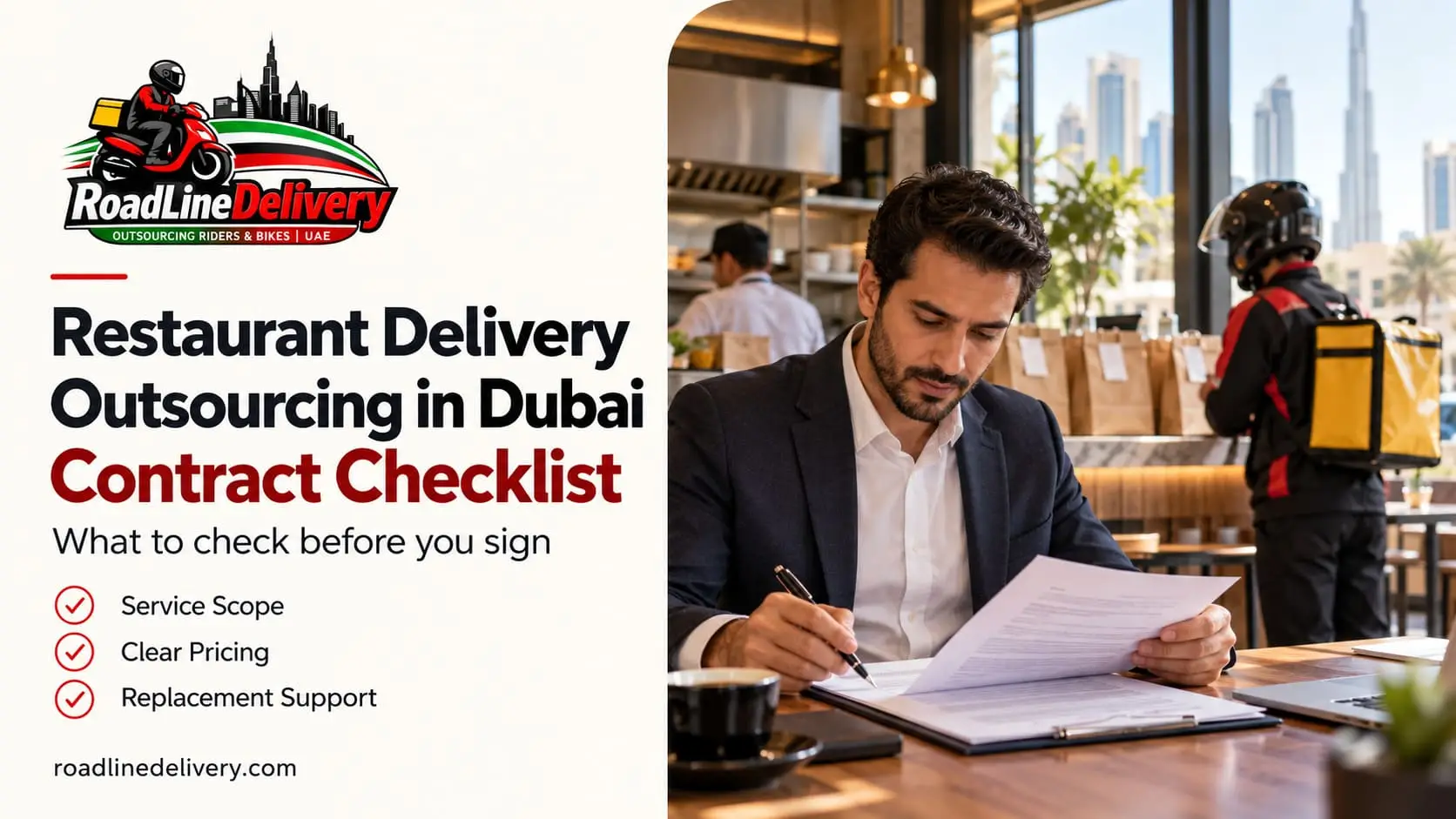
A delivery agreement can look straightforward until a rider misses a shift, an order arrives damaged or an unexpected charge appears on the invoice. For restaurant owners, these problems affect both operating costs and customer relationships. Restaurant delivery outsourcing in Dubai can help organise rider capacity, but its value depends on the service you actually agree to receive. Before signing, make sure the contract explains responsibilities, pricing and how everyday delivery problems will be resolved.
Define Exactly What the Service Includes
Start by confirming whether you are purchasing rider-only support, a rider-and-bike package or a managed delivery service. These arrangements carry different responsibilities, and supplying riders does not necessarily mean managing your entire dispatch operation. The agreement should identify who allocates orders, supervises riders, provides equipment and communicates with customers. Specify the restaurant branches covered, delivery areas, operating days and shift hours. If riders are dedicated to your restaurant, record that arrangement clearly rather than relying on a verbal understanding that could change during busy periods.
Understand the Complete Pricing Structure
Compare restaurant delivery outsourcing costs using the full package, rather than the headline monthly fee. Ask whether fuel, maintenance, insurance, tolls and replacement support are included, where applicable. Check how additional hours, extra riders, waiting time, failed deliveries and trips outside the agreed coverage area are charged. The contract should also explain deposits, payment deadlines, applicable taxes and any circumstances allowing price changes. A quotation based on your actual workload makes budgeting easier and helps prevent disagreements when the first invoice arrives.
Agree on Measurable Service Standards
A promise of “fast delivery” leaves too much open to interpretation. Discuss realistic pickup and delivery targets for your menu, service area and busiest trading hours. Distinguish between delays caused by food preparation and those occurring after the rider collects the order. Agree how timestamps will be recorded and how performance will be reviewed, including on-time pickups, completed deliveries and customer complaints. Any service credits or remedies for missed commitments should be documented, with clear conditions and exceptions. Targets should support reliable delivery without encouraging unsafe riding.
Check Rider Readiness and Food Handling
Ask the provider to explain its rider training, relevant documentation, insurance arrangements and vehicle maintenance procedures. Dubai’s RTA delivery services guidance addresses rider safety, training, vehicle specifications and food safety, making these important areas to discuss during provider assessment. For your restaurant, define practical handover procedures: checking order numbers, protecting sealed packaging and using appropriate delivery equipment. Clarify who supplies and cleans delivery boxes, and how handling instructions are communicated. A rider collecting soup, drinks or a delicate dessert needs clear guidance about transporting that order.
Confirm Replacement and Peak-Time Support
A restaurant cannot pause dinner service because a rider is absent or a motorcycle needs repairs. Ask how replacement requests are raised, what response time the provider commits to and whether backup support carries additional charges. Discuss the process for requesting extra capacity during weekends, promotions or new branch openings. Confirm how much notice is required and whether additional riders are guaranteed or subject to availability. Record these details in the agreement so your team knows what support it can depend on when demand rises.
Clarify Complaints, Payments and Customer Information
Decide who handles customer calls, incorrect addresses, missed handovers and damaged or missing orders. The contract should describe how incidents are recorded, investigated and resolved, including any agreed responsibility for refunds or compensation. If riders collect cash, specify collection records, reconciliation and remittance arrangements. Also agree how customer names, phone numbers and addresses may be accessed, used and retained for deliveries. Your restaurant should understand what information the provider receives and have a clear contact for operational issues throughout the agreed service hours.
Review Renewal, Cancellation and the Trial Period
Read the contract duration, renewal process, notice requirements and early termination charges before committing. Check whether you can adjust rider numbers or shift hours as your restaurant’s needs change, and how those adjustments affect pricing. Where possible, arrange a trial with agreed evaluation criteria, covering punctuality, communication, order handling and invoice accuracy. Discuss what happens when the relationship ends, including equipment returns, outstanding payments and customer information. These practical exit arrangements deserve the same attention as the initial quotation.
Discuss Your Restaurant’s Requirements with Roadline Delivery
Roadline Delivery offers rider-only support, rider-and-bike packages, monthly rider contracts and peak deployment support for businesses, including restaurants. To assess a suitable arrangement, contact Roadline Delivery with your branch locations, operating hours and expected order volumes. Request a written proposal covering the services, costs and support your restaurant needs, then review those commitments before signing.